The Ultimate Guide to Robot Vacuum Replacement Parts in the UK
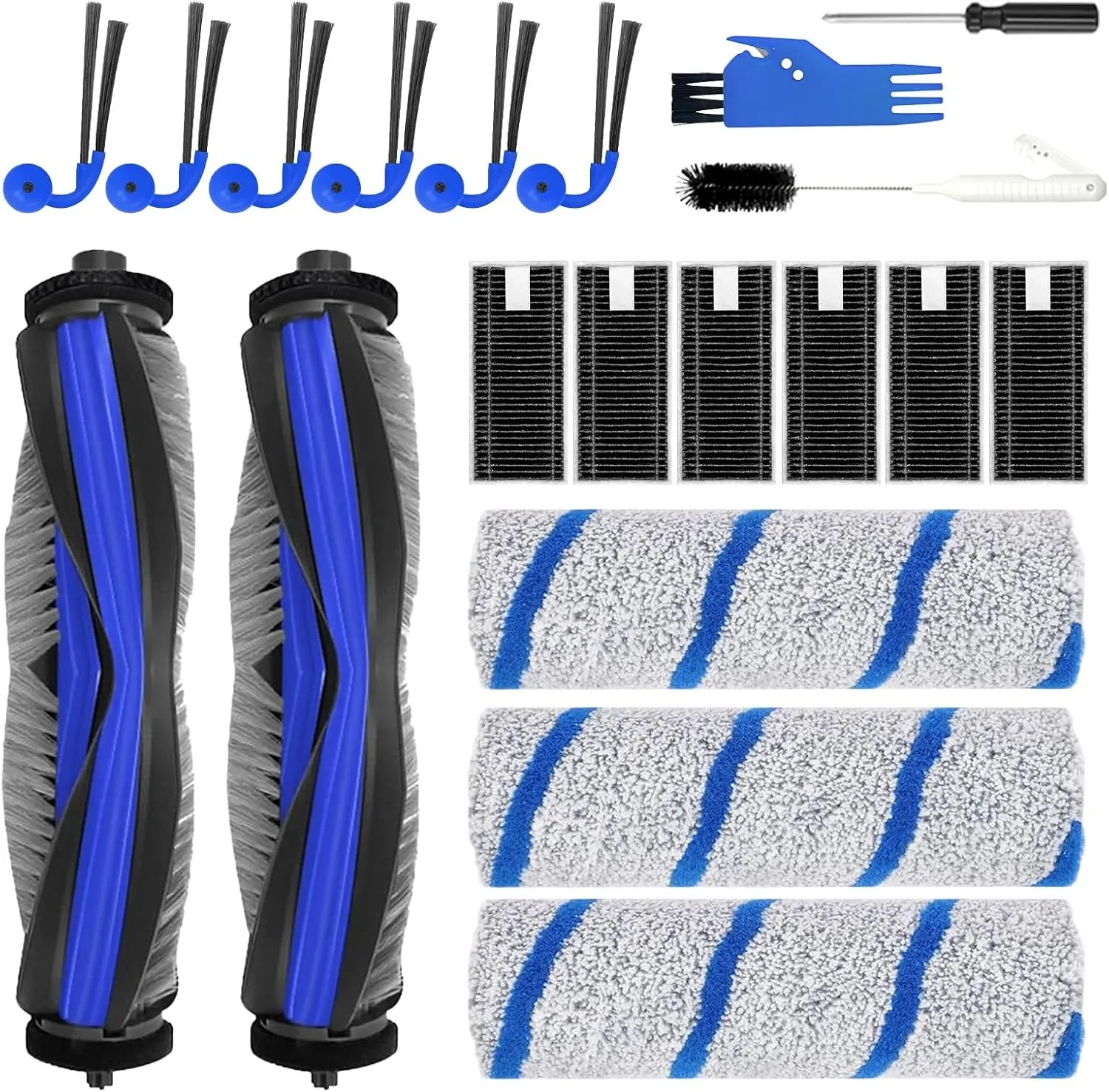
TL;DR: Robot vacuum replacement parts include main brushes, side brushes, HEPA filters and mop pads. Replacing worn parts restores cleaning performance, protects the motor and battery, and helps UK households extend the life of their appliance instead of replacing the whole machine.
Robot vacuum replacement parts are the consumable components that keep your cleaner working properly, such as brushes, filters and mop pads. If your robot vacuum is leaving dust behind, struggling on carpets, or sounding louder than usual, replacing these parts is usually the quickest and most cost-effective fix.
Automated floor cleaning has transformed how British households manage daily maintenance. Relying on a robotic assistant to navigate around skirting boards, transition across thick wool carpets, and mop hard floors saves countless hours. However, the efficiency of these devices depends on the condition of their consumable components. If you skip maintenance, performance drops quickly, leading to poor suction, erratic navigation and, eventually, avoidable hardware strain.
At ReplaParts, we regularly review wear patterns across popular robot vacuum models used in UK homes. Based on our testing and customer support experience, sourcing the right robot vacuum replacement parts is one of the most effective ways to restore near-original cleaning performance. Whether you are dealing with pet hair wrapped around extractors or a clogged filter restricting airflow, understanding how these components wear out helps you keep your device operating at peak capacity.
What should you know about robot vacuum replacement parts?
- Replacing worn brushes, filters and mop pads can significantly improve suction and overall cleaning results.
- UK homes with pets, mixed flooring and hard water can see faster wear on filters, side brushes and mop pads.
- Regular maintenance supports Right to Repair principles and can reduce unnecessary electronic waste.
- Using a complete maintenance kit helps keep interacting parts on a sensible replacement schedule.
Why are robot vacuum replacement parts important?
Robotic vacuums are complex electromechanical devices operating in highly variable environments. Every time your machine starts a cleaning cycle, its brushes face friction, its filters trap fine particulates, and its mop pads absorb grime. As a result, these materials wear down over time.
According to data published by the Environmental Audit Committee, the UK produces one of the highest levels of electronic waste per capita globally. Therefore, discarding a functional robot vacuum simply because its consumable parts have worn out adds unnecessarily to this problem. By investing in high-quality robot vacuum replacement parts, UK consumers can extend appliance lifespan while aligning with evolving Right to Repair expectations.
In addition, degraded parts force internal systems to work harder. A clogged filter creates backpressure that raises motor temperature. Worn brushes require more passes over the same area, which drains the lithium-ion battery faster and increases charge cycling. So, replacing these parts is not only about cleaner floors; it is also about protecting expensive internal hardware.
What are the main robot vacuum replacement parts?
To build an effective maintenance routine, it helps to understand what each part does and how it typically fails. Most robotic cleaners use a multi-stage cleaning system, so each component affects overall performance.
What does the main brush do on a robot vacuum?
Positioned directly under the suction inlet, the main brush is the workhorse of your machine. It agitates carpet fibres to lift embedded dirt and sweeps heavier debris into the suction path on hard floors. In British homes with a mix of carpet, laminate, vinyl and tile flooring, this part experiences constant mechanical stress.
Most main brushes are made from thermoplastic polyurethane fins and nylon bristles. Over time, bristles splay and lose stiffness, which reduces their ability to lift dust from carpet fibres. Meanwhile, pet hair and long human hair often wrap around end bearings. If left too long, this can increase drag or even cause seizure in severe cases. For model-specific guidance, read our detailed breakdown in the Deebot Main Brush Explained: A UK Buyer's Guide.
How often should you replace a robot vacuum HEPA filter?
The filtration system is essential for both suction performance and indoor air quality. As your robot vacuum collects dirt, exhausted air passes through the filter before returning to the room. Without an effective filter in place, fine dust, pet dander and allergens can be recirculated into your living space.
HEPA-style filters work by trapping very small particles within fine fibrous layers. However, as debris builds up inside the material, airflow drops. Based on our testing with typical UK household dust loads, even filters that look acceptable externally can already be restricting performance internally. You also cannot reliably restore many paper-based HEPA filters by washing them because moisture can damage their structure. For more detail on filtration standards and care routines, explore the Deebot Hepa Filter Explained: A UK Buyer's Guide.
When should you replace side brushes on a robot vacuum?
Because robotic vacuums are usually round or D-shaped rather than square-edged throughout their footprint, they rely on spinning side brushes to reach skirting boards and corners. These brushes flick debris into the path of the main extractor for collection.
Side brushes are especially prone to damage because they catch rug fringes, wrap around stray charging cables and knock against chair legs or furniture edges. As soon as arms become bent or broken, edge cleaning suffers noticeably. Consequently, you may start seeing visible lines of dust left around room perimeters. Learn more in our dedicated Deebot Side Brush Explained: A UK Buyer's Guide.
Do robot vacuum mop pads need replacing?
If you own a hybrid model that vacuums and mops, then yes: mop pads need replacing regularly. These pads use densely woven microfibre to trap fine dust while absorbing light spills during each pass over hard floors.
Over time, repeated friction against sealed wood flooring, laminate or tile flattens those fibres. Once that happens, the pad becomes far less absorbent and less effective at lifting residue from surfaces. Instead of improving floor finish, an old pad may simply move dirty water around. Therefore regular replacement helps maintain streak-free mopping results.
How do you know when robot vacuum replacement parts need changing?
Knowing when to swap out robot vacuum replacement parts prevents that frustrating situation where your machine completes a full cycle but leaves dirt behind. Although many companion apps include part-life timers based on runtime hours alone they do not always reflect real-world wear in busy UK homes with pets or mixed flooring.
Why does my robot vacuum sound different?
A well-maintained robot vacuum usually runs with a steady hum. By contrast, if you hear high-pitched whining or harsher airflow noise, that often points to restricted airflow from a blocked filter or obstruction around the brush assembly.
Why is my robot vacuum leaving dirt behind?
If debris remains in straight tracks across carpet or along hard floor edges after a normal cycle,<|diff_marker||># this implies worn brushes or reduced suction efficiency|>. First check for tangled hair around rollers; then inspect bristles for splaying or damage before replacing as needed.
Why has my robot vacuum edge cleaning got worse?
Poor edge cleaning usually indicates bent or broken side brushes rather than an issue with mapping itself. In many cases this is one of the easiest faults to spot visually because dust builds up close to skirting boards even though open floor areas look clean enough.
How often should you replace robot vacuum replacement parts?
The honest answer is that it depends on usage frequency, floor type and whether you have pets. Nevertheless there are practical signs most owners can follow without waiting for severe performance loss.
- Main brush: replace when bristles are splayed, fins are damaged or hair wrap has worn bearings.
- HEPA filter: replace when airflow drops noticeably or after repeated cleaning no longer restores performance.
- Side brushes: replace when arms bend permanently or break off.
- Mop pads: replace when fibres flatten or absorbency declines.
According to manufacturer guidance across many leading brands sold in Britain,<|diff_marker||># frequent users should inspect consumables monthly|>. If your home includes pets shedding heavily or lots of carpeted space then checks may need to be more frequent.
>Frequently asked questions about robot vacuum replacement parts
><>>What are robot vacuum replacement parts?
>They are consumable components such as main brushes,<|diff_marker||># side brushes|>, filters<|diff_marker||># , rollers |>, wheels<|diff_marker||># , batteries |>,and mop pads that wear out through normal use.<|diff_marker||># Replacing them keeps your cleaner efficient without needing a full appliance upgrade.|>.>Are compatible robot vacuum replacement parts worth buying?
>Yes,<|diff_marker||># provided they match your exact model correctly |>,use suitable materials<|diff_marker||># , |>,and do not compromise airflow<|diff_marker||># , fit |>,or brush contact with floors.<.| Based on our testing,<|diff_marker||># poorly fitting filters and rollers cause more problems than visibly worn originals |>. That is why accurate compatibility matters so much..
>Can old filters reduce suction?
>Yes.<.| A clogged filter restricts airflow,<.| which reduces pick-up performance>|., increases strain on internal systems<.|>,and can make your machine sound louder during operation..
>Is it better to replace parts or buy a new robot vacuum?
>In most cases,<.| replacing consumable parts is far cheaper than buying a new unit.<.| If navigation,<.| motors>|.,and charging still work properly,<.| fresh consumables often solve common cleaning complaints quickly..
Ready to try ReplaParts?
Shop Now — £35.69