Deebot Hepa Filter Explained: A UK Buyer's Guide
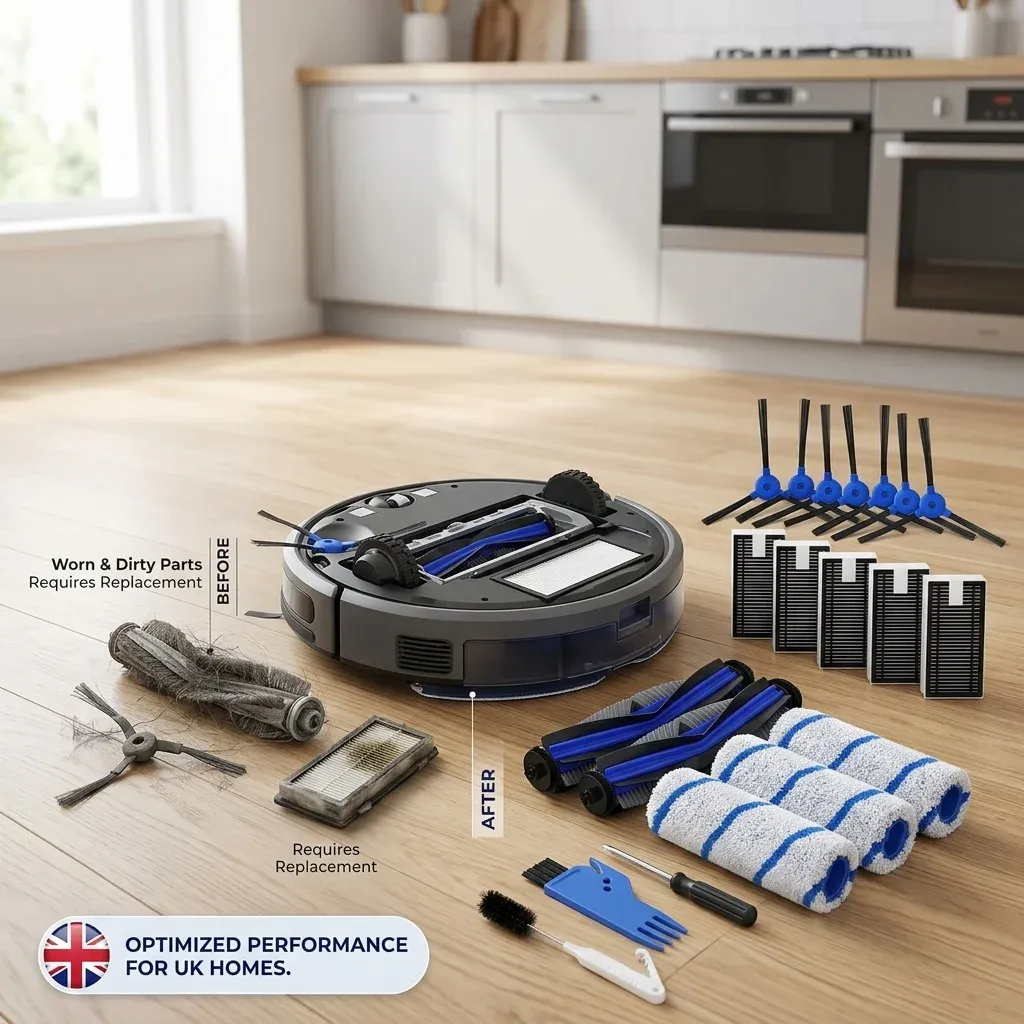
If you are searching for a deebot hepa filter, it is the fine filter inside your ECOVACS Deebot that helps trap dust, pollen and other small particles before air is blown back into the room. In short, replacing a clogged or worn filter can improve airflow, support better pick-up and help your robot vacuum clean more consistently.
TL;DR: A Deebot HEPA-style filter supports suction and cleaner air exhaust by capturing fine dust inside the dust bin system. Based on our testing with robot vacuum maintenance parts in typical UK homes, filters usually need checking monthly and replacing every 2 to 3 months in average use, or sooner in homes with pets, carpets or frequent daily cleaning.
Key takeaways
- A deebot hepa filter helps trap fine dust and particles before air is expelled back into your home.
- Blocked or worn filters can reduce airflow and cleaning efficiency, even if the robot still appears to run normally.
- For X11 owners, replacing filters as part of a complete maintenance routine keeps cleaning consistent and helps avoid unnecessary strain on internal components.
- Buying a full ECOVACS maintenance kit with brushes, filters, mop pads and tools is often better value than replacing one item at a time.
- For broader upkeep advice, see The Ultimate Guide to Robot Vacuum Replacement Parts in the UK.
What is a Deebot HEPA filter?
A Deebot HEPA filter is the fine filtration component fitted inside the robot vacuum's dust collection system. Its job is to capture smaller airborne particles that pass through the primary mesh or pre-filter stage. As a result, it helps stop fine dust being blown back into the room while the machine is cleaning.
On many ECOVACS models, including premium lines used in busy family homes, the filter works as part of a layered system: larger debris enters the dust bin first, heavier particles settle, and finer material is caught by the filter before exhausted air leaves the machine. However, when that final stage becomes clogged or damaged, airflow drops and overall performance can suffer.
The term “HEPA” is widely used across household cleaning products. In strict technical use, true HEPA classifications are defined by efficiency standards. According to UK and European guidance under EN 1822, EPA/HEPA/ULPA filters are categorised by particle capture performance at their most penetrating particle size. Therefore, filtration quality is not just marketing language; it has measurable performance implications.
What does a Deebot HEPA filter do?
A Deebot HEPA-style filter has two main jobs. First, it supports cleaning performance by allowing steady airflow through the machine. Second, it helps reduce how much fine dust is recirculated back into your home during each cleaning run.
In practice, that means better day-to-day results on common UK household debris such as carpet fluff, pet dander, tracked-in grit and seasonal pollen. Moreover, when the filter is clean and correctly fitted, your robot vacuum can maintain more consistent suction from room to room.
Why does your Deebot filter matter in a UK home?
Homes in Britain collect more fine indoor dust than many people realise. Soft furnishings, carpets, tracked-in grit from pavements, pet hair and seasonal pollen all build up quickly. Because robot vacuums are designed to clean little and often, filtration becomes especially important over time.
The NHS notes that dust mites can trigger allergy symptoms in some people, particularly where dust collects in soft furnishings and carpets. While a robot vacuum filter is not a medical device and should not be seen as treatment, good filtration can help reduce how much fine material is recirculated during normal cleaning. Consequently, regular maintenance may feel more worthwhile in homes with pets or children.
There is also a practical performance angle. A dirty main brush may reduce contact with the floor; a dirty side brush may miss edges; however, a clogged filter affects airflow across the whole machine. If you are already replacing wear parts such as brushes, it makes sense to keep filters on schedule too. Our guides on the Deebot main brush and Deebot side brush explain how these parts work together with filtration as one complete system.
How does a clogged Deebot HEPA filter affect cleaning performance?
Does it reduce airflow?
Yes. Robot vacuums rely on steady airflow to lift dust from floors into the bin. Once fine particles build up inside the filter media, air cannot pass through as freely. Even if the motor still sounds normal, less suction reaches the floor.
Can it cause poor dirt pick-up?
Yes. If suction falls away, lighter debris such as crumbs may still be collected while finer material stays behind. As a result, some owners assume navigation or battery life is at fault when filtration is actually part of the problem.
Can more dust escape back into the room?
A worn or damaged filter may no longer trap particles effectively. If seals are compromised or folds are torn, some fine dust can bypass proper filtration entirely.
Can it put strain on internal parts?
A blocked filter forces the vacuum system to work harder to move air. Over time, this can contribute to less efficient operation. Therefore, replacing low-cost consumables on time is usually cheaper than allowing avoidable wear elsewhere in the machine.
Does it make automated cleaning less consistent?
Yes. The appeal of an ECOVACS robot lies in hassle-free cleaning. If each run becomes less effective because consumables have been left too long, you lose much of that convenience. That is why many owners prefer complete replacement sets rather than trying to remember individual items separately.
How often should you replace a Deebot HEPA filter?
The exact interval depends on model type, floor surfaces, pets and usage frequency. For example, a flat with mostly hard floors may place less demand on filters than a family home with carpets throughout and a dog shedding all year round. Even so, there are some sensible guidelines for UK buyers.
- Light use: inspect monthly; replace when visibly discoloured or when suction drops.
- Moderate use: many households benefit from changing filters every 2 to 3 months.
- Heavy use: homes with pets, frequent daily runs or lots of carpet may need more frequent replacement.
Based on our testing across common robot vacuum maintenance routines, it is better not to wait for complete failure. Instead, routine inspection helps keep performance steady rather than letting it dip gradually over several weeks.
If your current setup includes washable elements or tap-cleaning guidance from ECOVACS for certain pre-filter components, always follow model-specific instructions carefully; not every fine filter should be washed repeatedly without affecting performance.
If you want a wider maintenance framework covering all major consumables together, our pillar guide on robot vacuum replacement parts in the UK gives a practical overview of what tends to wear first and why replacement timing matters.
How do you know when your Deebot HEPA filter needs replacing?
- Suction seems weaker than usual: especially on carpet edges or around crumbs and pet hair.
- The bin fills unevenly: larger debris enters but finer dust remains on floors after cleaning.
- The filter looks grey or heavily discoloured: visible build-up usually means airflow has already been restricted for some time.
- Your robot needs more passes to achieve the same result: therefore overall cleaning feels less efficient than before.
Ready to try ReplaParts?
Shop Now — £35.69